Pages

Saturday, 20 July 2013

Could Your Burger Really Be Only 2% Meat?

A while back, I posted an image that received much attention and was the source of a similar amount of controversy (see below). 


The meat 'filler' which the statement was referring to was, what is affectionately known as 'pink slime'. This substance has since, purportedly, been removed from McDonalds hamburgers ... However, a recently published study from the journal Annals of Diagnostic Pathology determined that 15% may be an over estimation with regard to the meat content of hamburger patties.

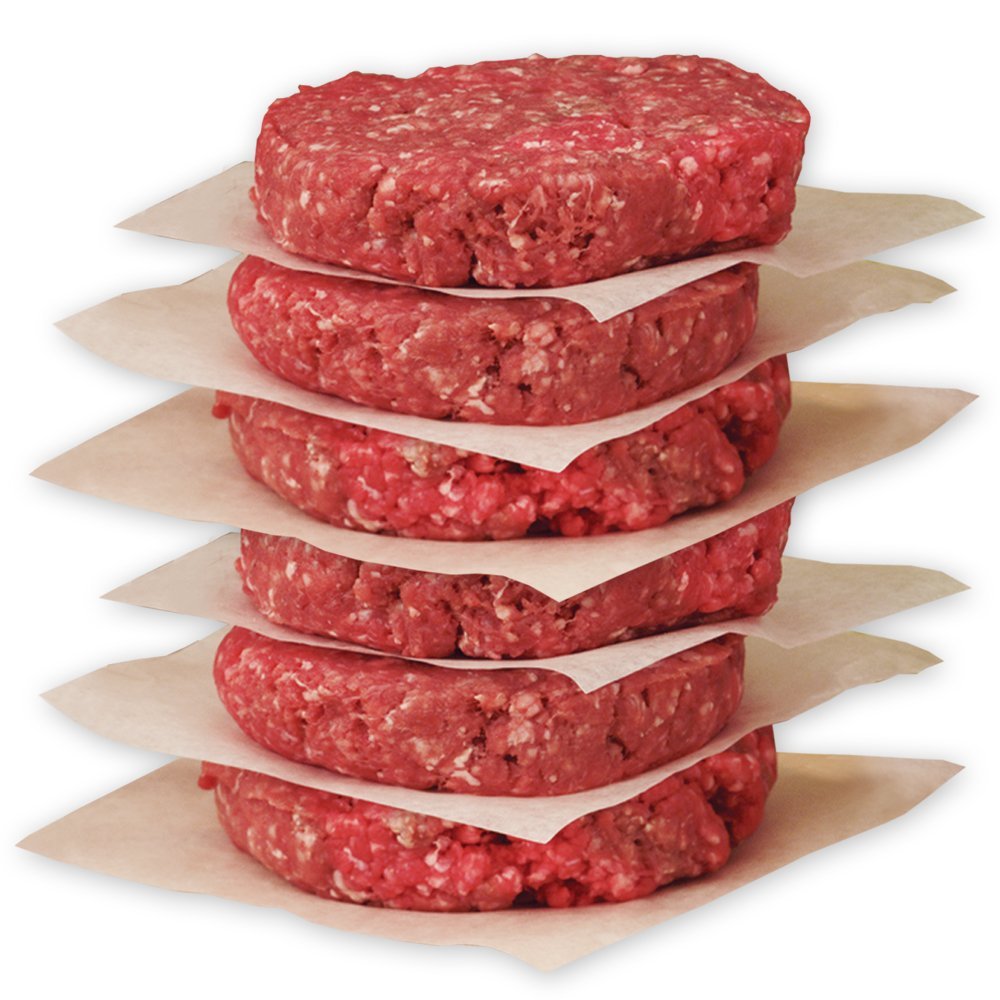
Though a stop-off at a drive thru may be quick and convenient, the circular buns may do little for you in terms of nourishment. The researchers tested eight fast food hamburger patties from popular restaurants within America, conducting a histological analysis of the 'meat'. Their findings were quite astounding -


NCIS - Nutritional Claims Investigation Services: Hamburger Autopsy Results

  • 37.7% - 62.4% Water, with an average of approximately 49.0%
  • 2.1% - 14.8% Meat, with an average of approximately 12.1%
  • the remainder (anywhere between 22.8% and 60.2%) preserved skeletal muscle, blood vessels, peripheral nerves, adipose tissue, cartilage and bone
The author commented that, with regard to hamburger patties; "approximately half of their weight is made up of water. Unexpected tissue types found in some hamburgers included bone, cartilage, and plant material; no brain tissue was present."

Well ... thank god we're not quite eating cow brains. Disturbingly, two of the hamburgers tested were found to contain cellular parasites (Sarcocystis). Under cooked meat containing such parasites can cause diarrhea or muscle tenderness and in more extreme cases breathing problems and death in humans.

Before you rush to defend your favourite eatery, suggesting that it's different in some way to the beef patties tested in the above study, or that it is difficult & expensive to purchase and prepare quality ingredients, take a moment to reflect on the words of renowned author Stephen Covey:

'the key is in not spending time, but in investing it'

These words apply universally across all dimensions of life. However, they may be most poignant in the context of health and wellness. Investing a nominal portion of time to drafting a diet plan, cooking a work-week's worth of food and pre-packing your meals each day are three of the simplest steps you can take to move yourself closer to a healthier, longer-lived you.

Don't know what a diet plan should look like? Invest some time into researching evidence based blogs such as Genki-Do and Suppversity, talk to those within your social circles interested in nutrition, and take the first step in your 'journey of a thousand miles'.

Don't feel overwhelmed by the onslaught of 'have to's' ... Break your overall goal down into steps and focus on one at a time.

However, before the next time you decide to feed on the pig-slop that is a commercial hamburger, ask yourself whether the excuses you're making for your actions are truly justifiable, or whether you're just relapsing into the comfort zone you've been battling against. 

Reference:

Prayson B, McMahon JT, Prayson RA (2008). Fast food hamburgers: what are we really eating? Ann Diagn Pathol, 12(6), 406-409.


Friday, 21 June 2013

The Performance Enhancing Effects of Music

As a child, there were few video games I completed without the use of some cheat code or walkthrough guide. As an adult constantly striving for improved physical performance, I find myself latching on to tidbits of nutritional and supplemental information that I know will help me reach the 'edge' I'm looking for.


An Unlikely Ergogenic Aid?

It is no small coincidence that Henry David Thoreau wrote - "when I hear music, I feel no danger. I am invulnerable. I see no foe." Much has already been written on the stimulatory effects of music on athletes.

For example, Terry, Karageorghis, Saha & D'Auria (2012) found music provided ergogenic, psychological and physiological benefits in their study on treadmill running among elite athletes. The researchers found that time-to-exhaustion was 18.2% and 19.2% longer when the athletes ran in time to motivational music and neutral music, compared to no music. Furthermore, both music groups were associated with better running economy in the context of oxygen consumption and blood lactate concentrations. Similarly, Rendi, Szabo & Szabo (2008) wrote that their results indicated that fast music acted as an external 'psyching-up' stimulus in brief and strenuous muscle work.

Fast forward to a 2013 study from sports scientists at Brunel University, who found that music had an ergogenic effect on the swimming times of their athletes.


The Study

In order to determine whether swimmers react positively to music, they provided each athlete with a waterproof MP3 player and asked them to swim 200m as fast as they could.

Playing in their ears was either 'Sexy and I Know It' by LMFAO OR 'Howl' by Florence and the Machine. The researchers found that the former song was motivational due to it's simple rhythm and positive lyrics.


On the other hand, the song 'Howl' was more complex and rated 'oudeterous' (neither motivational nor demotivational).

Both songs had the same tempo (130bpm). The scientists commented that this beat was ideal for performance enhancement.


The Results

Swimmers improved their times by an average of 2% when listening to music, when compared with the control who swam in silence.

In line with prior findings, it would appear that the beat rather than the lyrics is where the magic occurs. However, it should be noted that 70% of the participants advised that they preferred to swim to LMFAO than Florence and the Machine.


The Take Away

A 2% increase in performance may not seem like much. However, it is the often the kick that an individual may require to boost them to the next level of physical performance. For example, take a bodybuilder who is dead-lifting 150kg - that would equate to a performance increase of 3kg and may just provide that additional kick required to transfer that individual from stagnation to further progression.


References:

Karageorghis, et al. (2013). Psychological, psychophysical and ergogenic effects of music in swimming. Psychology of Sport and Exercise, 14(4), 560 - 568.

Rendi, M., Szabo, A., & Szabo, T. (2008). Applied research performance enhancement with music in rowing sprint. The Sport Psychologist, 22(2), 175-182.

Terry, P.C., Karageorghis, C.I., Saha, A.M., & D'Auria, S. (2012). Effects of synchronous music on treadmill running among elite triathletes, 15(1), 52 - 57.

Friday, 24 May 2013

Hookah - A Healthier Option?

According to the Cancer Council of Australia, in 1945, approximately 72% of Australian men smoked. Since then, the rate has dropped significantly, with 2010 survey data indicating that only 16.4% of Australian males and 13.8% of Australian females smoke cigarettes. Regardless, smoking is the largest preventable cause of death and disease in Australia, with a tobacco-related death occurring about once every 28 minutes.

While some of those intending to quit manage to turn away from cigarettes entirely, many turn to other addictive behaviours to fill the void left in their lives. One alternative is smoking tobacco preparations in a water pipe (hookah, shisha). This practice is widespread in many places of the world and is perceived by many as a relatively safe alternative to cigarettes. I myself have, in the past, experimented with smoking water pipe, lulled under a false sense of security.


However, a recent comparison of nicotine and carcinogen exposure with water pipe and cigarette smoking found evidence to explain where added concerns may lie with the former.

The researchers ascertained that, when smoking an average of 3 water pipe sessions compared with smoking 11 cigarettes per day, water pipe use was associated with a significantly lower intake of nicotine however, a greater exposure to carbon monoxide, and a different pattern of carcinogen exposure compared with cigarette smoking, which included greater exposure to benzene and high molecular weight polycyclic aromatic hydrocarbon. 

On the other hand, there was less exposure to tobacco-specific nitrosamines, 1,3-butadiene, acrolein, ethylene oxide, and low molecular weight polyciclic aromatic hydrocarbons.

In short, it appears that water pipe smoking is not benign but, rather that use of the hookah may result in a different pattern of carcinogen exposure which may result in a entirely different cancer risk profile. For example, high levels of benzene exposure have been associated with leukemia.

Another reason to shun smoking entirely is the research suggesting that water pipe smoking negatively affects lung function and could be as harmful as cigarette smoking in this regard. As such, it is likely to be a cause of COPD (chronic obstructive pulmonary disease), which is the fourth leading cause of mortality in the United States.

Reference:

Jacob III, P., et al. (2013). Comparison of nicotine and carcinogen exposure with water pipe and cigarette smoking, Cancer Epidemiol Biomarkers Prv, 22, 765.

Raad, D., et al. (2011). Effects of water-pipe smoking on lung function: A systematic review and meta-analysis, Chest, 139(4), 737-738.

Saturday, 18 May 2013

Increasing Post-Workout Protein Turnover

One does not need to be an athlete to see the beneficial effects that increased protein can provide to a nutrition plan. It is recommended that adult women consume 0.75g and adult men consume 0.84g per kilogram of bodyweight. So, for example - a 75kg adult male would need a measly 63g of protein per day. 

As an individual who engages in both resistance training and martial arts, I find that the government regulations leave me with drastically increased DOMS (delayed onset muscle soreness) and impact my ability to recovery from exercise. As such, I subscribe to the recommendations of Dr 'Protein' Peter Lemon, of the University of Western Ontario who has advised that "the RDA for those engaged in strength training should be about 1.7 - 1.8g of protein per kilogram of body mass per day."

That being said, what is the best way to consume this quantity. Is there any appreciable difference between living the bodybuilding lifestyle of 6 smaller, protein-based meals spread throughout the day or a single bolus dose of steak eaten at dinner?

Researchers from Switzerland and Canada attempted to test just that question and to investigate the effects of the intervals at which protein is ingested.

The Study

They performed experiments with 24 young men, all of whom performed strength training 4 - 6 times a week (finally, a study relevant to the non-couch potato). The individuals performed leg extension exercises in the laboratory prior to breakfast. Warm-ups were performed with 5 sets at 60-70% of their 1RM, followed by 4 sets of 10 reps at 80% 1RM.

In the 12 hours following this session, the individuals were administered a TOTAL of 80g whey isolate. The three groups were separated as such:
  • BOLUS group: 2 servings of 40g whey (1 portion per 6 hours)
  • INT group: 4 servings of 20g whey (1 portion per 3 hours)
  • PULSE group: 8 servings of 10g whey (1 portion per 1.5 hours)
Interestingly, protein synthesis was highest in those who spread their intake out during the day. While the difference in net muscle increase between the three groups was subtle, a trend was apparent where net protein balance was highest in the INT group. While protein synthesis was higher in the PULSE group, protein breakdown was also higher in the same individuals.

Notably, the differences were not statistically significant. However, the study was also 'under powered'. The researchers claimed that with a larger number of subjects, the sought after significance values may have emerged.

Implications

Given that whole-body protein balance appeared to be greatest with moderate 20g feedings every 3 hours, this has implications for individuals attempting to enhance their anabolism and lean mass accrual through the use of strength training.

Indeed, the bodybuilder paradigm of separating the day into 6 meals may be the ideal way to provide yourself with the slight increase in anabolism that is required to push an aspiring athlete into the next stage of their training.


Reference:

Moore, D.R., Areta, J., Coffey, V.G., et al. (2012). Daytime pattern of post-exercise protein intake affects whole-body protein turnover in resistance-trained males. Nutr Metabolism (London), 16(9), 91.

Friday, 17 May 2013

Acne: Pathways, Causes and Cures

And ... We're back! To my readers, I'd like to extend my sincerest apologies about the recent lack of articles. As the stresses and pressures of life built up, I found myself needing a short hiatus to collect and compose myself so that I could keep churning out quality information to those of you who read it!

However, that doesn't mean I've been sitting on my hands. The first article off the bat is one suggested to me by a friend and aims to debunk and clarify the myths behind the causes of acne.

It can be hard to believe that acne is yet another health outcome that we may have greater control over than social norms dictate. When we're teenagers, we shut up and put up with the aptly named acne vulgaris and hope that it will pass quickly. As adults, we dread it's return - petrified by dormant memories of social exclusion and stigma.


Diet and Acne - The Hypothetical Association

It is believed that the hypothetical association between diet and acne lies in the stimulation of Insulin-like Growth Factor (IGF-1) that occurs when the body is placed in a hyperinsulinemic state. Simply put, spikes in insulin caused by High GI foods would cause an increase in IGF-1 which would then increase the amount of circulating androgens in the blood, decrease sex hormone binding protein and increase 'sebum synthesis' (which is crucial in acne development). 

*Sebum keeps skin and hair soft and supple. Like anything, it requires balance. Too much sebum and you'll be battling acne; too little and you'll be fighting dry and cracked skin.

Thus, it could be suggested that a typical 'Western' diet rich in high glycaemic index foods such as pasta, flour, bread, sugar, etc may contribute to the formation of acne by causing hormonal variations in the body.

Acne & It's Recognised Causes

There is a progressive increase in acne from pre-adolescence to early adulthood which coincides with the pubertal androgenic spurt. As we learned above, greater circulating androgens contribute to sebum synthesis. Indeed, the density of acne has been found to be positively correlated with the sebum excretion rate.

With regard to diet, a number of studies have determined that dietary factors particularly high glycaemic foods and diets with a high glycemic load (GL), as well as greater dairy intake are positively associated with the development of acne.

A study of over 1,200 individuals from two non-Western societies found that there was an absence of acne in these populations. Interestingly, epidemiological studies of the Inuit Eskimo population, have observed that this culture had not presented with the symptoms of acne until the introduction of Westernized food habits.

With regard to the ingestion of milk, the paradox lies in the fact that, although lactose is a low-GI nutrient, milk increases levels of IGF-1 in the body. Ironically, for all of you 'skim milk' or 'fat free' drinkers - the aggravation of acne is more severe with the ingestion of fat-free milk than the regular variety.

The following image summarises the above quite succinctly -


Chocolate & Acne

Bad news for choc-a-holics! The theory of association between acne and chocolate is almost entirely confirmed by various clinical findings. 

For those who wonder about the mechanism behind it; it is postulated that chocolate is rich in various biologically active compounds including caffeine, teobromine, serotonin, phenylethylamine, etc which increase secretion of and resistance to insulin. At the same time, it contains insulinogenic amino acids including arginine and leucine which, when igested with carbohydrates and the artificial sugars within chocolate can contribute to acne formation.

Caffeine & Acne?

Unfortunately, little scientific evidence exists to directly link caffeine consumption of the development of acne. Once again, the theoretical tie-in is that caffeine consumption is purported to increase androgen levels in the blood, leading to the sebum synthesis slippery slope. However, a recent study into the effects of caffeinated and decaffeinated coffee on sex hormone-binding globulin and other sex hormone levels was unable to find a consistent effect of caffeinated coffee consumption on SHBG in participants.


One could surmise that caffeine may contribute to the development of acne by -
  • disrupting sleep patterns
  • causing adrenal fatigue (in chronic consumption)
  • slow down kidney function, thus inhibiting the body's ability to release it's toxins
Treating Acne?

Given what we've just learned about the formation and causes of acne, it seems illogical that prescription medication and harsh creams are the only possible pathway for treating the condition.

Some tips for keeping those nasty pimples away include:
  • Ensure that your Omega 3, Zinc and Vitamin A levels are adequate: All three of these nutrients help to reduce inflammation and zinc serves the double purpose of boosting immunity.
  • De-Stress: Stress raises cortisol which increases the production of oil in the skin.
  • Avoid High GI foods: for the reasons stated in the ENTIRE ARTICLE.
  • Keep your Kidney Happy (& I don't mean through a Lemon Detox): having appropriate detoxification pathways that aren't clogged by junk can assist your body in moving toxins where they need to go (rather than to your skin). So, cut the junk and give your kidney the much needed break it deserves.
  • Watch the Wheat & Grains: many people are sensitive to wheat gluten. Sensitivities can aggravate acne as it is a signal of a heightened immune response in reaction to a nutrient that the body has difficulty in processing. 
  • Drink plenty of water and keep regular: You heard me ... The kidney can detox your body but your physical excretion of waste matter is one of the best ways you have of ridding yourself of unwanted toxins. So go and grab some Psyllium Husk and let the good times flow.

References:

Wedick, N.M., et al. (2012). The effects of caffeinated and decaffeinated coffee on sex hormone binding globulin and endogenous sex hormone levels: a randomized controlled trial. Nutr J., 11 (86), 1475-2891.

Taylor, M., et al. (2011). Pathways to inflammation: acne pathophysiology. European Journal of Dermatology, 21(3), 323-33.

Reynolds, R.C., et al. (2010). Effects of the Glycemic Index of Cabohydrates on acne vulgaris. Nutrients, 2(10), 1060-1072.

Costa, A., Lage, D., & Moises, T.A. (2010). Acne and Diet: Truth of myth? Anais Brasilieros de Dermatologia, 83(3), 346-53.

Ismail, N. H., Manaf, Z. A., & Azizan, N. Z. (2012). High glycemic load diet, milk and ice cream consumption are related to acne vulgaris in Malaysian young adults: a case control study. BMC Dermatol., 12(13), doi: 10.1186/1471-5945-12-13.

Magin, P., et al. (2004). A systematic review of the evidence for 'myths and misconceptions' in acne management: diet, face-washing and sunlight. Family Practice, 22(1), 62-70.

Friday, 5 April 2013

Can We Trust Nutrition Labels?

There comes a time in many-a dieter's life when going by 'approximation' becomes insufficient. Whether you're a hardcore bodybuilder looking to achieve leanness beyond compare, or just your average dieter wanting to get their body 'beach-ready'. At this time, the individuals in question will often start 'counting calories' as a way of ensuring they are consistently in a caloric deficit. 


Eventually, you start to ritually check the nutritional labels of newly bought items to ensure serving sizes, etc. meet your requirements, at which point you cease to see a 'food product' and begin to see a combination of 'proteins, fats and carbohydrates'. The question that I always ask myself (especially when I see two identical products with sparsely different nutritional values) is - "how accurate are food labels?"


The Study:

In 2010, researchers at Tufts University conducted an analysis on 40 different foods bought in various restaurants and supermarkets to determine the accuracy of stated energy contents. Their target - 'reduced-energy foods' or those containing less than 500 calories. 


You Mean To Tell Me This Label Is Inaccurate?

Their analysis indicated that the number of calories measures nearly always exceeded the number of calories declared on the nutritional labels by the manufacturers and retailers. On average, they contained 8% more calories than the labels indicated. However, the researchers noted that some individual items contained up to 200% of stated values. That's a whopping DOUBLE what was declared on the food label.


The Take-Away:

While it goes without saying that it is impossible to generalize this study to the entire restaurant and food industry, it should make us all think about our purchases of pre-packaged foods. Urabn et al. (2010) note that, if widespread, the phenomenon observed in their research could hamper efforts to self-monitor energy intake to control weight.


The Solution:

While this may be difficult for some, to others the solution will be second-nature. Prepare and cook as much of your own food as possible, using un-refined ingredients and avoid pre-made products. Although the variation of energy-content and macro nutrient composition may vary between each individual vegetable, fruit, etc. depending on factors such as soil composition, etc; you will nevertheless be able to paint a much more accurate portrait of your overall energy intake.

If you have started down the path of calorie counting, the only logical method is to reduce as much error and variance as possible, in order to maximise the effects of your hard work and efforts.


Reference:

Urban, L. E., et al. (2010). The accuracy of stated energy contents of reduced-energy, commercially prepared foods. J Am Diet Assoc, 110(1), 116-123.


Fact or Fiction: Adding Fat To Your Meal Will Lower Insulin Response

When browsing the health and fitness boards or blogs, the sheer number of claims made without any scientific evidence-base is overwhelming. This 'broscience' as it is affectionately referred to by those of us 'in the know', is akin to the Siren's of Homer's Odyssey; guiding innocent and uninitiated souls to an unwitting doom at the hands of misinformation.


Broscience Fact: Adding Fat To A Meal Will Lower The Insulin Response

It is common 'knowledge' that adding some fat to a meal will help to reduce the insulin spike it will provide. If I had to guess, I would suspect that this fallacy first came about as some eager trainee mis-read the results of the studies suggesting that fatty meals are less insulinogenic than low fat meals.


Evidence-Based Reality

Unfortunately, the picture pained by the scientific evidence is somewhat different to the commonly accepted paradigm. For example, Collier & O'Dea (1983) examined the effect of co-ingesting 50g of butter on glucose, insulin and gastric inhibitory polypeptide responses to 50g of carbohydrates (potato) or 50g protein (low fat veal) in their participants. The addition of fat to a carbohydrate meal did result in lower blood glucose levels. However, the insulin response was not reduced.


The Take-Away

So, next time you feel inclined to add a handful of nuts to your rice to 'nullify' the insulin response from your bolus carbohydrate dose, remember that you are doing so under false pretenses.

While the addition of fat to a meal may increase satiety, it may do little in the way of keeping you lean!


Reference:

Collier G, & O'Dea K. (1983). The effect of coingestion of fat on the glucose, insulin, and gastric inhibitory polypeptide responses to carbohydrate and protein. Am J Clin Nutr, 37(6):941-4.