Pages

Thursday, 16 January 2014

Debunking 'Negative Calorie' Foods


Q: What do the above foods all have in common?
A: They are often touted as the poster children for 'negative calorie' foods.

Definition:

A negative calorie foods is a popular term used within the diet and fitspo blogosphere to describe foods which are believed to require more energy to digest than they provide. The theoretical net result is a caloric deficit which is oft hailed as a 'diet & weight loss secret'.

Debunking the Myth:

The idea of negative calorie foods sounds amazingly convenient - we can eat an unlimited amount of the above foods which will pave a guilt-free path to skinniness that we all desire. That ... plus, it sounds 'legit'.

Unfortunately, when we shine the light of evidence-based practice upon this assertion, the testable truth sounds somewhat less sexy than the miraculous claim.

To understand the fallacy of 'negative calorie' foods, we must first understand the thermic effect that food has within the body. The thermic effect of food is, essentially, the caloric 'cost' of digesting it. It is also the reason why negative calorie foods, by simple explanation, cannot burn more calories than they contain. If we examine the thermic effect of different nutrients we see that the magnitude depends on the composition of the food consumed:

Carbohydrates: 5 to 15% of energy consumed
Fat: 5 to 15% of energy consumed
Protein: 20 to 35% of energy consumed

To burn more calories than it contains, an item would be required to have a thermic effect of greater than 100%. Unfortunately, even proteins, which require the most energy to digest, only burn anywhere between 20 - 35% of the energy contained.

What about Bioactives, etc?

Though there is a possibility that there could be bioactive compounds in certain foods which increase metabolic rate, this would depend on ingestion of certain foods (e.g. grapefruit) and would not apply to all 'negative calorie' foods.

Your best bet would appear to be to pepper your food with chilli or MCT (e.g. coconut oil), which has been shown to increase diet induced thermogenesis by over 50%. But, even then, your negative calorie foods would fall short of their 100% target.

Bottom Line: Who Cares Anyway?

Assuming that a kilogram of fat requires a caloric deficit of 3,500 calories to burn, 10 calories of celery here (even if it were negative calorie), would not produce significant effects to any dieter's weight loss goals.This is especially so in our contemporary world, built so heavily around the instant gratification of desire.

A better strategy for any dieter would be to focus on appropriate macro-nutrient intake, particularly increasing protein to adequate amounts. This, in combination with the insulin sensitizing effects of a lower carb / high fat diet as well as high intensity training will produce measurable and visible effects that you can bank on.

Unfortunately, negative calorie foods are no 'magic bullet' for those seeking weight loss. However, they do tend to provide higher water and fiber content which can assist with improving satiety and controlling hunger. This, in itself, can be a benefit in the battle of the bulge.


Reference:

Clegg, M. E., Golsorkhi, M., & Henry, C. J. (2012). Combined MCT and chilli feeding increases diet induced thermogenesis in normal-weight humans. European Journal of Nutrition, 52(6), 1579-1585.

Shepphird, S. F. (2009). Question 74: 100 Questions and Answers about Anoerxia Nervosa. Jones & Bartlett, p. 171.



Wednesday, 15 January 2014

Plyometrics as a Prevention Strategy for Osteoporosis

Osteoporosis is a worldwide health problem that affects 1 in 3 women and 1 in 5 men, over 50. Data from the International Osteoporosis Foundation indicates that an osteoporotic fracture occurs every 3 seconds, resulting in 8.9 million fractures annually.

If you're not a post-menopausal woman or elderly man, you may be struggling to care about an issue that may not affect you for the foreseeable decades; however, in the case of osteoporosis (much as many things in life), it would seem that an ounce of prevention is worth a pound of cure. 

I would draw your attention to research which suggests that increasing bone mass during and after 'growth' may be an important strategy to ensure the outlook for your future is fifty and fit as a fiddle. Specifically, that increases of Bone Mineral Density of just 3 - 5% can reduce fracture risk by up to 30%. That's a 30% decrease in the likelihood that you will spend your twilight years in and out of hospitals for various replacements or worse - wheelchair bound and institutionalised in a nursing facility.

Plyometric Prevention Plan

In the study at hand, the researchers aimed to investigate the effects that 9 months of plyometric jump training would have on the Bone Mineral Content of adolescent girls (aged 14.6, give or take 6 months, and 22.7, give or take 14 months).

Exercise Protocol

Participants trained three times a week for 30 - 45 minutes. They began with progressive resistance exercises (squats, forward and side lunges, bench stepping and jumping on and off of a 20cm box).

They did about 2 sets, comprising 8 - 12 reps and the intensity was slowly taken from 5 - 15% of their bodyweight over a number of months. This means that a 55kg participant wore a nylon weighted vest weighing 2.75kg - 8.25kg.

The girls also did various plyometric exercises ranging from simple two footed jumps to stair jumping, bounding, and depth jumps from 12 to 24 inch boxes (see below).


Plyometric drills progressed from two sets, 10 reps of five to seven different exercises (100 - 140 jumps) to two to three sets,  2 - 20 reps of 12 - 20 exercises in the final months (360 - 1000 total jumps). While that number sounds extremely high, the researchers were careful to choose the exercises in such a way that the number of high intensity jumps was only between 40 - 100 in the final months.

Results

At the end of 9 months, the trends in bone mineral density observed in the participants led the researchers to suggest that plyometric jump training continued over a longer period may in adolescents may increase peak bone mass.

This could indeed be a novel way to help prevent the onset of osteoporosis in later years by instituting safe and effective behavioural changes in those of a younger age.

Not an adolescent? Fear not, it's never too late to start to reap the benefits of loading on bone mass. In my next blog, I will provide some good starting examples of exercises that can be both practical plyometric methods of inducing bone mineral density and uptake, as well as, fun ways to alter an otherwise boring training routine.


Reference:

Witzke, K. A., & Snow, C. M. (1999). Effects of plyometric jump training on bone mass in adolescent girls. Medicine & Science in Sports & Exercise, 0195-9131/00/3206-1051/0.


Sunday, 12 January 2014

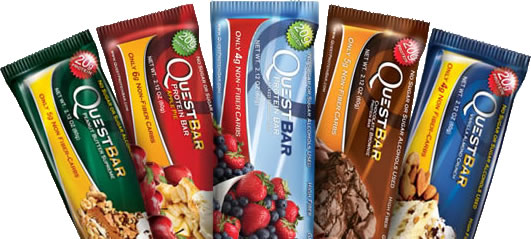
Quest Protein Bars - Simply, The Best

A quest can be defined as a long or arduous search for something. If you're reading this blog, then it's a safe bet that for you, much like for me, that 'quest' is defined by a search for greater health, fitness and wellbeing. During my journey, I have ingested all sorts of products ranging from multi-vitamins and amino acids to protein powders / bars and pre-workouts.

Most of these have fallen by the wayside, clumped into the category of 'poisons' based on the plethora of nasty ingredients contained therein. However, one product has stood out for it's unwavering commitment to quality.


Before I give you the skinny on why Quest Protein Bars should replace all other gunk in your protein pantry, let me start by saying that I am writing this review completely unsolicited. Okay, now that we've got that sorted, lets dive right in!

'The Power of Milk'
  Quest Nutrition has used both Whey Protein Isolate (WPI) and Milk Protein Isolate (MPI) in the formulation of their product. Now, before any of you start jumping up and down, beating the drum about the hazardous effects of milk (?), let me direct you to an outstanding review of whether milk is indeed has as many negative side effects as some would like you to believe (SuppVersity). Read it, and make up your own minds!

MPI differs significantly from WPI in that, Milk Protein Isolate should contain all of the proteins naturally found in milk (a.k.a. approx. 80% casein and 20% whey). On the other hand, Whey Protein Isolate is just that, 100% whey protein.

The fact that Quest Nutrition has incorporated both WPI and MPI into their bars will provide a more sustained release of protein, giving your body and muscle the sustenance it requires over a prolonged period.

IMO Fiber

Before you get freaked out by the long-ass name, be aware that iso malto-oligosaccharides are normal components of the human diet that occur naturally in a number of fermented foods including rice miso, and sake

A number of studies have found IMO Fiber exerts numerous benefits on the human digestive tract as a prebiotic. Also, to address the elephant in the room, Quest Nutrition have done their research with regards to the less desirable effects of fiber (i.e. flatulence).

Studies on the fermentation of fiber in the human gut have found that IMO's were effective at increasing beneficial bacteria, whilst generating the least gas.
 
Almonds, Peanuts & Cashews

We've all heard about the magical health properties of nuts (and if we haven't, see below for a summary).


Quest Nutrition Nutrition's use of almonds, cashews and peanuts perfectly accentuates each bar, never overpowering the taste, but creating delicate undertones that leave you feeling like you're eating a decadent dessert (when you're not!).

Sea Salt, Natural Flavours

This is perhaps one of my favourite aspects of the Quest Protein Bar Range. Quest Nutrition uses sea salt which still has all of the trace minerals in tact as well as natural flavours to make an outstanding product.

When I say 'natural flavours', you can be sure that it is exactly that! If you treat your body like a temple, fear not - Quest Nutrition will not defile it. There is no marketing double talk here. After contacting Quest Nutrition for clarification, I was put to ease by the information they provided. For example, Quest's 'Natural Strawberry Flavor' is made from organic fresh strawberries, differentiating it from other products which can often use less than natural ingredients that will make you cringe.


Stevia

For those worried about  potential insulin effects of sweeteners, fear not - stevia does not induce a glycemic response and has been found to enhance insulin levels above baseline without altering blood sugar (Jeppesen, et al,. 2002). If this wasn't enough, here are 5 other reasons why stevia may be a worthwhile investment for any health-conscious reader:

  • Antitumor and anticancer activity
  • Antihypertensive activity
  • Anti-diarrheal activity
  • Renal (liver and kidney) protective activity
  • Antioxidant activity
Quest Nutrition also uses the Chinese fruit Luo Han Guo as a sweetener. I won't bore you with the nitty gritty; however, this fruit shares many of it's health benefits with stevia.

Erythritol

While I would prefer the lack of any sugar alcohol's in my products, erythritol is general considered safe for consumption. The only side effects of excessive consumption of this and other sugar alcohols is gastric distress.

However, much like chewing gum - you'd need to consume a considerable amount of the product to produce any undesirable effects.

Sucralose

Here, we come to the only product that I would try to avoid. Some sources will argue that artificial sweeteners will likely wreak havoc on your body, impeding your appetite regulation, reducing good bacteria in the intestine, increasing your intestine's pH levels, etc. However, I'll once again point to a great blog post by the SuppVersity author on Sucralose in which he reviews the available evidence for such claims.

Adel concludes his review by commenting that 'derangements that occur in response to changes in the gut microbiome, endocrine system or toxic effects of sucralose would only become visible after weeks or months of chronic ingestion of this globally approved artificial sweetener.'

Meaning, you'd need to ingest a bucket-load daily in order to see the negative reported effects. Personally, I prefer to play it safe with anything artificial. Luckily, Quest Nutrition, unlike other products, gives you a choice. You can buy a range of Quest 'Naturals' which are just as delicious as the original line, which do not use sucralose as a sweetener. Smart product planning at it's best.

How does it compare to Others?

Now that you know what's on the label for Quest Bars, it's important to compare them with some popular products for an understanding of exactly how superior they are. I recommend 'Lean It Up's' excellent ranking of the top 30 protein bars on the market for a snapshot of exactly how much rubbish goes into products.

Quest Nutrition has shown us that you can make a delicious and nutrition protein bar using a handful of wholesome ingredients. A quick Google Search on 'negatives effects of [insert unknown ingredient]' will produce information that will allow you to make an informed decision about the product you're buying.

Remember, if you can't identify it in a supermarket, it's always worth a quick search to see exactly what that item is, how it's produced and what effects it will have on your body in the long-term.


Price Point

At a reasonable $2.00 USD per bar (a far cry from the circa $4.00 you'll expect to pay in supplement shops), the Quest Nutrition website is the best and cheapest place to purchase bars.

For those of you still complaining about the price, remember that you cannot put a price on health. If you're following a well-controlled diet and exercise program and looking for that extra boost - Quest should definitely be the product that gets you there!


Reference:

Rycroft, C. E., Jones, M. R., Gibson, G. R., & Rastall, R. A. (2008). A comparative in vitro evaluation of the fermentation properties of prebiotic oligosaccharides. Journal of Applied Microbiology, 91(5), 878-887.

Wednesday, 8 January 2014

5 Ways to Make Your New Year's Resolution a Reality

For many, the New Year heralds the start of a fresh beginning, as well as a cognitive 'restart button' through which we often believe all of our perceived inadequacies can be erased with the use of a 'resolution'.


According to Forbes Magazine, 40% of Americans make New Year's resolutions. This tells us that the rest of the first world is probably not far behind. The success rate for change attempts is much more sobering. University of Scranton research suggests that just 8% of people achieve their New Year's goals. Furthermore, longitudinal examination of change attempts over a 2 year period indicated only 19% of participants were able to maintain their pledges for two years.

In principle a resolution should be simple to keep. You make a promise and then follow it through. So, what is it about New Years resolutions that is so hard to maintain?

The Major Players:

  1. Lack of willpower
  2. Inability to control the 'stimulus' (events in the environment that influence behaviour)
In the example of weight loss / gain - junk food may be considered a 'stimulus'. Thus, your inability to control your family's or partner's purchasing and stocking of all of the yummy junk food's you so decadently indulge in, can be seen as a barrier to maintaining your New Year's resolution.


Now before you sign the divorce papers or lock yourself in the basement for 6 months to ensure the success of your goals, we should look at another elements of maintaining goals - slips. Approximately 53% of the people in the study cited earlier that managed to maintain their goal, experienced at least one slip. Over two years, the average number of slips for successful participants was 14. This should tell you something: nobody is perfect, and nobody has willpower of steel. Slips were found to be precipitated by:


  1. Lack of personal control
  2. Excessive Stress
  3. Negative Emotion
Sticking with my former example, who hasn't felt the call of the ravenous beast within during a particularly 'low' period filled with stress and negative emotions (e.g. EXAM TIME!). If you have, then fear not - you're not a bad human being .... you're just normal!

So, apart from placing yourself into a impenetrable fortress of solitude (or a research lab with a perfectly controlled environment), what can you do to make sure this year's New Year resolutions are a great success!


  • Set S.M.A.R.T. goals:
Saying 'I want to lose weight' is tantamount to saying 'I want to fail' - you haven't set an appropriate goal for yourself. Goals should always be Specific, Measurable, Achievable, Relevant and Time-Bound.

As such plan:
  1. Exactly what you want to accomplish, e.g. I want to lose 5kg.
  2. How you will measure it, e.g. Using mirror-check's, body fat measurements, tight clothes and track my weight on a scale.
  3. Make sure that the goal is something you can achieve, e.g. don't tell yourself you'll be a fitness model in 2 months if you think that the road to your goal will take 2 years.
  4. Keep the goal personally relevant - something that's important to you.
  5. Set a time-limit, e.g. I will lose 5kg in 5 weeks.

  • Fading:
Fading is a principle in psychology where you first use prompts to promote an action before gradually withdrawing them until the need for them fades away.

A simple application in the context of fat loss and muscle gain is images of an achievable physique that you wish to aspire to, or a meal plan stuck on a fridge.

Hanging a tight fitting pair of jeans in the living room can be a reminder of the goal you are working towards. When I was adjusting to a healthy eating plan, I often referred to my meal plan before every meal to ensure that I knew that the food I was about to eat was my 'quota' and that I should enjoy it, because no snacking would come thereafter.
  • Counter Conditioning:
Counter Conditioning is essentially replacing an unwanted response with a new response. It is seen is smokers frequently, when they replace a cigarette with a sandwich to quell their addiction.

Instead of that, try replacing your unwanted behaviour with another more healthy one. For example, when you start to feel hungry and you know that this is simply the call of your former over-eating habits, try brushing your teeth or making a pot of tea. This will quell your hunger and condition your body back into a healthy eating regime.

  • Give yourself permission to fail:
As evidenced in the above study, a major portion of people have difficulty setting and maintaining long term goals. So why should you be different? I'll tell you why - because we usually set unrealistically higher expectations for ourselves rather than those around us.

Instead of throwing away your resolution with that first sip of alcohol or that first bite of a pizza - try being gentle with yourself and not making a mountain out of a molehill. I guarantee that one or two slips will not result in a broken promise; however, throwing away your resolution for a better you at the first sign of failure is a sure-fire way to ensure that your goal will never be achieved.
  • Ask yourself 'how's that working for you?'
Finally, don't be afraid to try something new. If you're a cardio bunny and your goal is to lose weight - why not try to hit the weights. As intimidating as it can be learning a new skill, if you sit with the discomfort of pushing yourself outside of your comfort zone - you will ultimately thank yourself (and me) for it afterwards.

Reference:

J. C. Norcross, & D. J. Vangarelli. (1989). The resolution solution: longitudinal examination of New Year's change attempts. Journal of Substance Abuse, 1(2), 127 - 134.

Saturday, 14 December 2013

Crush Stress at a Genetic Level Using Mindfulness Meditation

Picture yourself in the African Serengeti. You hear the rustling of a bush, the crack of a twig. Your body reacts immediately, moving into a state of hyper vigilance. Good thing too, the noise you heard was the stalking of a wild beast, and gave you enough time to secure your weapon and retreat to a safe location.

As in the above example, stress can be a positive influence in our lives. However, when we face a continuous onslaught of stress with little relief or relaxation between challenges, the negative effects of stress begins to rear it's ugly head. 


Nearly 75 - 90% of all doctor's visits are for stress-related ailments and complaints, and stress is known to play a large role in a range of conditions from chronic disease to general aging. As such, the medical community continues to search for the magic bullet to help people cope.

Doctors will prescribe a range of analgesics and anti-inflammatory medications to keep the chronic effects of stress to a minimum. Those outside the medical orthodoxy will look to supplements such as Curcumin to make a difference; however, what if you didn't need to take anything to reduce your stress and to provoke measurable, genetic changes to markers of stress. 

What if I told you that you could downregulate proinflammatory genes for free!? I'm sure that 50% of you would be incredulous, while the other 50% would be chomping at the bit to try what I'm about to promote.

Meditation:

A growing body of scientific research is now attempting to understand the neurophysiological and cellular responses induces by methods that improve stress management, including mindfulness-based meditation practices.

Prior studies have established that mindfulness-based stress reduction can reduce cytokine secretion, oxidative stress and DNA damage as well as increase telomerase activity (the enzyme which has a 'rejuvenating' effect on normal cell aging).


The Study:

A recent study by researchers in Wisconsin, Spain and France has reported the first evidence of specific molecular changes in the body, following a period of mindfulness meditation. 

The study compared a group of untrained control subjects who engaged in quiet 'intentional' activities including walking, playing video games, reading, etc. with a group of meditators who performed 8 hours of mindfulness practice. Their activity was separated into a morning session - 

- 30 min inspiration meditation talk
- 40 min guided mindfulness meditation
- 10 min guided walking meditation

- 20 min unguided walking meditation
- 40 min unguided sitting meditation
- 30 min unguided walking meditation

The participants had a 10 minute audio on mindful eating with a 1 hour lunch break and then participated in an afternoon session of - 

- 15 min inspirational meditation talk
- 4 x 40 minute meditation sessions

The Results:

After the mindfulness practice, subjects showed a range of genetic and molecular differences including altered levels of gene-regulating machinery and reduced levels of pro-inflammatory genes, which correlated with faster physical recovery from stress.

The researchers emphasized that there was no difference between the control group and the meditators prior to the 8 hour mindfulness session.

What the researchers were interested in was the fact that their outcome provided proof of principle that mindfulness practice can lead to epigenetic changes in the genome.

The Application:

The application of this should be immediately apparent to the health conscious. We are wading through a soup of chronic inflammation on a daily basis, and anything that we can do to reduce this inflammation (particularly without nasty side effects) should be a staple in our lives.

Big whoop! I can just hear cries of -  "I'm glad that the participants got something out of sitting around in lotus pose for 8 hours, but I don't have the time!"

For those who are interested in the positive health effects that mindfulness meditation can have on the body here are a couple of basic exercises that can be done in the comfort of your own home in the space of minutes - 

One Minute Mindfulness

Set your phone or an egg timer to ring in 60 seconds. When you press 'start', your task is to focus your attention on your breathing, and nothing else, for the minute. It's not meant to be a 'rushed' task - you may find that your mind will wander as meditation is a 'learned skill'; however, just notice your mind wandering and gently bring your attention to your breath.

Try not to follow any particular trains of thought, nor engage with your thoughts. They will be there, it's your task to simply concentrate inwards on your breathing.


Mindful Walking 

Using the same principles as the first exercise, whenever you are walking somewhere - whether it be on the treadmill at the gym, or to work - just observe what is around you as you walk, staying in the present. 

Let all thoughts of the past or future go and ground yourself in the moment. Feel the sensation of your heel striking the pavement and your foot rolling forward, notice the way your clothes move in the wind or how they brush against your skin with each step.

The mind can be a noisy and burdensome beast! Try a couple of minutes of being in the present today and see the difference it can make.


Reference:

Kaliman, P., Alvarez-Lopez, M. J., Cosing-Tomas, M., Rosenkranz, M. A., Lutz, A., & Davidson, R. J. (2014). Rapid changes in histone deacetylases and inflammatory gene expression in expert meditators. Psychoneuroendocrinology, 40, 96-107.


Saturday, 20 July 2013

Could Your Burger Really Be Only 2% Meat?

A while back, I posted an image that received much attention and was the source of a similar amount of controversy (see below). 


The meat 'filler' which the statement was referring to was, what is affectionately known as 'pink slime'. This substance has since, purportedly, been removed from McDonalds hamburgers ... However, a recently published study from the journal Annals of Diagnostic Pathology determined that 15% may be an over estimation with regard to the meat content of hamburger patties.

Though a stop-off at a drive thru may be quick and convenient, the circular buns may do little for you in terms of nourishment. The researchers tested eight fast food hamburger patties from popular restaurants within America, conducting a histological analysis of the 'meat'. Their findings were quite astounding -


NCIS - Nutritional Claims Investigation Services: Hamburger Autopsy Results

  • 37.7% - 62.4% Water, with an average of approximately 49.0%
  • 2.1% - 14.8% Meat, with an average of approximately 12.1%
  • the remainder (anywhere between 22.8% and 60.2%) preserved skeletal muscle, blood vessels, peripheral nerves, adipose tissue, cartilage and bone
The author commented that, with regard to hamburger patties; "approximately half of their weight is made up of water. Unexpected tissue types found in some hamburgers included bone, cartilage, and plant material; no brain tissue was present."

Well ... thank god we're not quite eating cow brains. Disturbingly, two of the hamburgers tested were found to contain cellular parasites (Sarcocystis). Under cooked meat containing such parasites can cause diarrhea or muscle tenderness and in more extreme cases breathing problems and death in humans.

Before you rush to defend your favourite eatery, suggesting that it's different in some way to the beef patties tested in the above study, or that it is difficult & expensive to purchase and prepare quality ingredients, take a moment to reflect on the words of renowned author Stephen Covey:

'the key is in not spending time, but in investing it'

These words apply universally across all dimensions of life. However, they may be most poignant in the context of health and wellness. Investing a nominal portion of time to drafting a diet plan, cooking a work-week's worth of food and pre-packing your meals each day are three of the simplest steps you can take to move yourself closer to a healthier, longer-lived you.

Don't know what a diet plan should look like? Invest some time into researching evidence based blogs such as Genki-Do and Suppversity, talk to those within your social circles interested in nutrition, and take the first step in your 'journey of a thousand miles'.

Don't feel overwhelmed by the onslaught of 'have to's' ... Break your overall goal down into steps and focus on one at a time.

However, before the next time you decide to feed on the pig-slop that is a commercial hamburger, ask yourself whether the excuses you're making for your actions are truly justifiable, or whether you're just relapsing into the comfort zone you've been battling against. 

Reference:

Prayson B, McMahon JT, Prayson RA (2008). Fast food hamburgers: what are we really eating? Ann Diagn Pathol, 12(6), 406-409.


Friday, 21 June 2013

The Performance Enhancing Effects of Music

As a child, there were few video games I completed without the use of some cheat code or walkthrough guide. As an adult constantly striving for improved physical performance, I find myself latching on to tidbits of nutritional and supplemental information that I know will help me reach the 'edge' I'm looking for.


An Unlikely Ergogenic Aid?

It is no small coincidence that Henry David Thoreau wrote - "when I hear music, I feel no danger. I am invulnerable. I see no foe." Much has already been written on the stimulatory effects of music on athletes.

For example, Terry, Karageorghis, Saha & D'Auria (2012) found music provided ergogenic, psychological and physiological benefits in their study on treadmill running among elite athletes. The researchers found that time-to-exhaustion was 18.2% and 19.2% longer when the athletes ran in time to motivational music and neutral music, compared to no music. Furthermore, both music groups were associated with better running economy in the context of oxygen consumption and blood lactate concentrations. Similarly, Rendi, Szabo & Szabo (2008) wrote that their results indicated that fast music acted as an external 'psyching-up' stimulus in brief and strenuous muscle work.

Fast forward to a 2013 study from sports scientists at Brunel University, who found that music had an ergogenic effect on the swimming times of their athletes.


The Study

In order to determine whether swimmers react positively to music, they provided each athlete with a waterproof MP3 player and asked them to swim 200m as fast as they could.

Playing in their ears was either 'Sexy and I Know It' by LMFAO OR 'Howl' by Florence and the Machine. The researchers found that the former song was motivational due to it's simple rhythm and positive lyrics.


On the other hand, the song 'Howl' was more complex and rated 'oudeterous' (neither motivational nor demotivational).

Both songs had the same tempo (130bpm). The scientists commented that this beat was ideal for performance enhancement.


The Results

Swimmers improved their times by an average of 2% when listening to music, when compared with the control who swam in silence.

In line with prior findings, it would appear that the beat rather than the lyrics is where the magic occurs. However, it should be noted that 70% of the participants advised that they preferred to swim to LMFAO than Florence and the Machine.


The Take Away

A 2% increase in performance may not seem like much. However, it is the often the kick that an individual may require to boost them to the next level of physical performance. For example, take a bodybuilder who is dead-lifting 150kg - that would equate to a performance increase of 3kg and may just provide that additional kick required to transfer that individual from stagnation to further progression.


References:

Karageorghis, et al. (2013). Psychological, psychophysical and ergogenic effects of music in swimming. Psychology of Sport and Exercise, 14(4), 560 - 568.

Rendi, M., Szabo, A., & Szabo, T. (2008). Applied research performance enhancement with music in rowing sprint. The Sport Psychologist, 22(2), 175-182.

Terry, P.C., Karageorghis, C.I., Saha, A.M., & D'Auria, S. (2012). Effects of synchronous music on treadmill running among elite triathletes, 15(1), 52 - 57.