Pages

Showing posts with label Motivation. Show all posts

Wednesday, 8 January 2014

5 Ways to Make Your New Year's Resolution a Reality

For many, the New Year heralds the start of a fresh beginning, as well as a cognitive 'restart button' through which we often believe all of our perceived inadequacies can be erased with the use of a 'resolution'.


According to Forbes Magazine, 40% of Americans make New Year's resolutions. This tells us that the rest of the first world is probably not far behind. The success rate for change attempts is much more sobering. University of Scranton research suggests that just 8% of people achieve their New Year's goals. Furthermore, longitudinal examination of change attempts over a 2 year period indicated only 19% of participants were able to maintain their pledges for two years.

In principle a resolution should be simple to keep. You make a promise and then follow it through. So, what is it about New Years resolutions that is so hard to maintain?

The Major Players:

  1. Lack of willpower
  2. Inability to control the 'stimulus' (events in the environment that influence behaviour)
In the example of weight loss / gain - junk food may be considered a 'stimulus'. Thus, your inability to control your family's or partner's purchasing and stocking of all of the yummy junk food's you so decadently indulge in, can be seen as a barrier to maintaining your New Year's resolution.


Now before you sign the divorce papers or lock yourself in the basement for 6 months to ensure the success of your goals, we should look at another elements of maintaining goals - slips. Approximately 53% of the people in the study cited earlier that managed to maintain their goal, experienced at least one slip. Over two years, the average number of slips for successful participants was 14. This should tell you something: nobody is perfect, and nobody has willpower of steel. Slips were found to be precipitated by:


  1. Lack of personal control
  2. Excessive Stress
  3. Negative Emotion
Sticking with my former example, who hasn't felt the call of the ravenous beast within during a particularly 'low' period filled with stress and negative emotions (e.g. EXAM TIME!). If you have, then fear not - you're not a bad human being .... you're just normal!

So, apart from placing yourself into a impenetrable fortress of solitude (or a research lab with a perfectly controlled environment), what can you do to make sure this year's New Year resolutions are a great success!



  • Set S.M.A.R.T. goals:
Saying 'I want to lose weight' is tantamount to saying 'I want to fail' - you haven't set an appropriate goal for yourself. Goals should always be Specific, Measurable, Achievable, Relevant and Time-Bound.

As such plan:
  1. Exactly what you want to accomplish, e.g. I want to lose 5kg.
  2. How you will measure it, e.g. Using mirror-check's, body fat measurements, tight clothes and track my weight on a scale.
  3. Make sure that the goal is something you can achieve, e.g. don't tell yourself you'll be a fitness model in 2 months if you think that the road to your goal will take 2 years.
  4. Keep the goal personally relevant - something that's important to you.
  5. Set a time-limit, e.g. I will lose 5kg in 5 weeks.

  • Fading:
Fading is a principle in psychology where you first use prompts to promote an action before gradually withdrawing them until the need for them fades away.

A simple application in the context of fat loss and muscle gain is images of an achievable physique that you wish to aspire to, or a meal plan stuck on a fridge.

Hanging a tight fitting pair of jeans in the living room can be a reminder of the goal you are working towards. When I was adjusting to a healthy eating plan, I often referred to my meal plan before every meal to ensure that I knew that the food I was about to eat was my 'quota' and that I should enjoy it, because no snacking would come thereafter.
  • Counter Conditioning:
Counter Conditioning is essentially replacing an unwanted response with a new response. It is seen is smokers frequently, when they replace a cigarette with a sandwich to quell their addiction.

Instead of that, try replacing your unwanted behaviour with another more healthy one. For example, when you start to feel hungry and you know that this is simply the call of your former over-eating habits, try brushing your teeth or making a pot of tea. This will quell your hunger and condition your body back into a healthy eating regime.

  • Give yourself permission to fail:
As evidenced in the above study, a major portion of people have difficulty setting and maintaining long term goals. So why should you be different? I'll tell you why - because we usually set unrealistically higher expectations for ourselves rather than those around us.

Instead of throwing away your resolution with that first sip of alcohol or that first bite of a pizza - try being gentle with yourself and not making a mountain out of a molehill. I guarantee that one or two slips will not result in a broken promise; however, throwing away your resolution for a better you at the first sign of failure is a sure-fire way to ensure that your goal will never be achieved.
  • Ask yourself 'how's that working for you?'
Finally, don't be afraid to try something new. If you're a cardio bunny and your goal is to lose weight - why not try to hit the weights. As intimidating as it can be learning a new skill, if you sit with the discomfort of pushing yourself outside of your comfort zone - you will ultimately thank yourself (and me) for it afterwards.

Reference:

J. C. Norcross, & D. J. Vangarelli. (1989). The resolution solution: longitudinal examination of New Year's change attempts. Journal of Substance Abuse, 1(2), 127 - 134.

Tuesday, 8 January 2013

The Parable Of The Two Martial Artists

Today, I'd like to move briefly away from my usual delivery of research-oriented information and tell you a story about two men seeking the knowledge of a great Martial Arts Master (which happens to perfectly supplement my earlier post on perseverance).

I know you're probably rolling your eyes and getting ready to exit the web browser, but I encourage you to indulge me. I found the lesson of this tale profound, & am convinced that any reader with a dormant philosopher or spiritual inside them will do the same!


So the story goes that two young men of similar qualities, strength and ability sought out a renowned Martial Arts Master to impart upon them his knowledge. The Master took the men to an open field, sending one to the left and one to the right. He gave both men a small shovel and said to them 'the first one to find water will be rewarded will all of the knowledge which he seeks'.

The Master told them persistence was the key to unlocking their destinies. Although the two men were similar in so much, their methods for finding water differed greatly. The man on the left was aggressive and began digging with vigor and enthusiasm. The man to the right first observed the terrain. Then, he found an area which looked suitable.

By this time, the man on the right had already dug a deep hole and felt there was no water and so he moved on to dig in another area. Meanwhile, the man on the right - undeterred - started digging his hole. As the Master instructed, he stayed focused and persistent.

After three months of digging, the man on the left was starting his 21st hole, but has not found a droplet of water. This fact disheartened him greatly. The man on the right was still in the same hole, about 25 feet down. He had to construct a ladder to get to the bottom but still looked strong.

Finally, after 6 months, the man on the right had dug more than 50 feet into the ground until he finally hit water. Excited, he ran with all haste to the Master and said 'Master, I found the water - when can I begin to gain your knowledge?' 

The Master said, 'young man, you have completed your first and most important lesson. All you need to do is use the same focus and determination as you did digging for the water and you will be the greatest Martial Artist in the world.'

The Master then said, 'let this be a lesson; the man who digs in one hole will find his wealth and success, the man who digs many holes will grow tired and weak and will no longer have the desire to finish his journey'.

Sunday, 6 January 2013

Building Perseverance From The Inside, Out

As early as 1907, psychology has sought to determine why some individuals accomplish more than others of similar ability. What possesses one person to endure numerous difficulties to complete a task, while another habitually fizzles when faced with adversity?

While some traits such as emotional intelligence, self-confidence or physical attractiveness may be important, one could argue that some characteristics may be essential to success regardless of domain.

So, what personal quality is shared by the most prominent leaders in every field? 

What separates the 'winners' from the 'losers' and how can you get some?


Perseverance (a.k.a. 'grit')

Grit entails working toward challenges, maintaining effort and interest over time despite failure, adversity and plateaus is progress. Sound like you? Then you can stop reading ... If not, lets explore the concept a little further to help understand ways to encourage it's development.


The gritty individual approaches achievement as a marathon: stamina is their advantage. Where boredom or disappointment will signal to others that it's time to change trajectory, the gritty individual will stay their course.


Grit & IQ

We often think of intelligence as the best predictor of achievement. However, Howe (1999) argued that perseverance was at least as crucial for high achievement as intellectual ability. Similar studies of in chess, sport, music and visual arts, have found that practice sets aside exceptional performers, suggesting that raw 'talent' may not be enough for ultimate success.


Grit & Personality

Some believe grit overlaps with aspects of personality such as conscientiousness (thoroughness). In my humble opinion, it is a separate trait unto itself. For example, individuals high in their need to 'achieve' will purse goals that are neither too easy nor too hard. The gritty will deliberately set a long-term objective and stick to it even in the absence of positive reinforcement. 


The Neuro-chemistry of Grit

It may be hard to see how one can influence personality without psychological intervention. However, each person unconsciously acts daily to change attitudes and behaviours. 

When you accomplish a goal, treat yourself to that last bit of chocolate, etc. the body produces dopamine (a.k.a. the 'reward molecule'). It has been known for years now that dopamine production is related to positive behaviour reinforcement. However, more recent research has found that key receptors for dopamine act like 'gateways' that enable habit formation. Why should you care? Because this opens the door to speeding up the formation of good habits such as perseverance.


How To: Become a Grittier You

Using the knowledge that your internal 'reward system' will regulate behaviour by making you feel good when you achieve a goal there are several steps you can take to consciously trigger the release of dopamine, thereby making new behaviours that much easier to stick to:

  • The Pleasure Over Pain Principle 
As animals, are hardwired to seek pleasure and avoid uncomfortable experiences. Most people see 'perseverance' as an arduous and painful process. To create grit, try reframing your views. Stop interpreting perseverance as a 'drag' and start looking at it as an opportunity to boost your confidence in a feel-good way. Let your new mantra be [INSERT NAME OF TASK] = BLISS. Although laziness may be seductive in the short term, over time, complacency leaves dopamine depleted and you dissatisfied and depressed.

  • Play a Game
Start looking for other ways to create reward throughout the day and deliver your much wanted rush of dopamine. Even mundane activities such as puzzles, brain-teasers and simple games can help your brain release dopamine. Try winning a few and see how you feel.

  • Believe It
It is important to have a system of belief around the core areas of our lives. By cultivating the belief that persevering to achieve a goal will produce more dopamine, your brain will 'learn' to accept this for a fact.

  • Cheer Yourself On
When you achieve a goal tell yourself "Yes! I did it!" - always talk yourself up, not down. Goals not going as planned? Try another dose of psychological reframing. Instead of focusing on the fact that you have yet to make that big lift at the gym you or haven't lost enough weight for the week,  look for the positives and reward yourself mentally for the challenges you've gone through to achieve what you have.

  • Repetition, Repetition, Repetition
Regular repetition of a behaviour is the one of the most effective ways to hardwire the habit of perseverance. Don't give up prematurely, tell yourself that your goal is within your reach and learn to accept momentary set-backs as a part of life, rather than a reflection of your ability. The longer you stick with a regimen, the less it will be viewed as a 'disagreeable' experience, eventually becoming a labour of love.


References:

Howe, M. J. A. (1999). Genius explained. New York: Cambridge University Press

Matthews, M. D., & Kelly, D. R. (2007). Grit: Perseverance and passion for long-term goals. Personality Processes and Individual Differences, 92(6), 1087-1101.

Wang, L. P., Li, F., Wang, D., Xie, K., Wang, D., Shen, X., & Tsien, J. Z. (2011). NMDA receptors in dopaminergic neurons are crucial for habit learning. Neuron, 72(6), 1055-66.

Monday, 17 December 2012

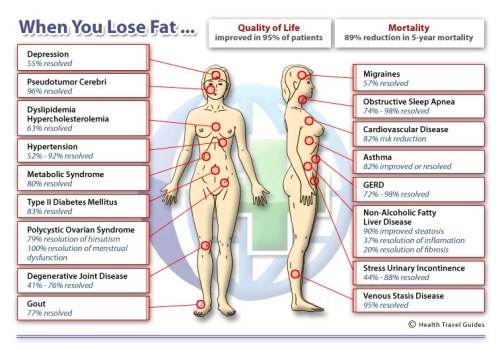
What Happens When You Lose Fat ...


Weight Loss Tip:
Managing body fat can seem like an uphill battle. The above image clearly shows the advantages you stand to reap by reaching the mountain-top. Try printing this picture and strategically placing it in areas where you will be reminded of it’s significance to you. Stick it up in your pantry; your desk drawer at work; in your glove compartment; in your bag; on your computer-desk table to remind yourself to keep on fighting

Benjamin Franklin on Prevention


Don’t wait until your problems overcome you. Turning your life around may seem difficult NOW; imagine how hard it will be when all the odds are stacked against you. So, stop making excuses why you CAN’T and find some reasons why you CAN!

Tuesday, 11 December 2012

Bruce Lee on Goals


Don’t unfairly criticize yourself if you fall short of your goal (whatever it may be).Instead, learn to realistically appraise your efforts, and adapt your strategy to bring your target ever closer within your reach. But always remember, there is no shame in shooting for the stars because the chances are, if you do, you’ll often find that even your ‘failures’ will hit the moon.

Yoko Ono on Aging


Never forget, all created concepts are bound by the beliefs of its adherents … Your time is only limited by the constraints of your mind.
Abandon thoughts of ‘it’s too late’, ‘I’m too old’ or ‘I don’t have the time’ and discover your fountain of everlasting youth!

Saturday, 8 December 2012

Robert Pirsig on Inner Zen


Life is wasted on a search for the elusive obvious. We often look within, without seeing what’s really there … Learn to introspect without the interjection of false negative self-talk and you’ll find no need to scale mountains or cross deserts. After all; if you’re unable to find the truth right where you are, where else do you expect to find it? 

Plan For Success: Using Contracts as The Springboard to Your Health Goals


A great way to make sure you commit to something is to create a contract or pledge with yourself. This is great for people who need a certain level of accountability to follow through with their plans. You can make the contract as simple or as complicated as you like, and it can be useful to place your agreement somewhere visible so that it’s not ‘out of sight, out of mind’.
I know that I have several goals I’d like to achieve in the coming year with relation to my health & fitness. However, targets such as “gain 5kg of lean muscle mass” are more long-term aspirations. They serve as something to shoot for, but if we don’t have a sub-set of goals, our motivation can drop when times get tough.
Using my weight goal for 2013 as an example, sub-goals of mine include:
  • Revisit my nutrition plan:
I intend to draw up a range of protocol variations to suit factors such as two-a-day training, single-sessions, rest-days, etc. These will be intended to keep my body guessing and, hopefully, stimulate new growth.
  • Rewrite my training protocol:
I will incorporate more periodization into my program, specify ‘rest weeks’ everyX months, and move between sacroplasmic and myofibrillar hypertrophy phases.
  • Look at my supplement regime:
Do I really need to be taking this supplement or mixing that powder? I want to cut down to the bare essentials, so as not to load my body with unnecessary junk. Remove ‘pre-made’ products from my supplements and select only the best.
These three ‘sub-goals’ will ideally lead me to achieve the larger one. When it looks like you’re not moving towards your ultimate target, you need to address your ‘process’ and look at whether some of the smaller goals you’ve set yourself are working as well as they should be.
Also, ALWAYS REMEMBER, good goals are S.M.A.R.T …

Happy Planning!

Einstein on Insanity


Too often do we fall into the rut of routine. When your progress stalls remember, you are the greatest obstacle to your own growth. If something in your life isn’t working; seek and embrace change as your saving grace!

Joseph Campbell on The Greatest Treasure


Find a strong enough reason for why you desire the treasure, and you’ll find the torch to guide you through the darkness.

Bruce Lee on Flexibility


Strive to follow the willow’s example - know when to bend; resilience is flexibility, and flexibility will help you overcome any obstacle.

Friday, 7 December 2012

Dogen Zenji on the Flow of Life


Dōgen Zenji (道元禅師): “a flower falls even though we love it, and a weed grows even though we do not love it.”


Do not strive to change the nature and flow of life. Rather, to be happy, learn to understand, accept and appreciate the beauty in everyday life while it is upon you.

Thursday, 6 December 2012

Follow The Whisper of Your Heart


The heart has it's reasons, which reason knows nothing of - Follow the whisper.

The Fine Line Between Dreams & Reality


How Close Are You?

Bruce Lee Says ...

Do not fear failure … Not failure, but low aim is the crime. In great attempts it is glorious even to fail


The Bhagavad Gita Says ...

To action alone hast thou a right and never at all to its fruits; let not the fruits of action be thy motive


Tuesday, 4 December 2012

Believe & You Will Achieve!


Hi guys and girls,

Being a psychologist, I’m well acquainted with the mind’s amazing ability to overcome obstacles and difficulties. Often, our failure to achieve set goals and targets are self-imposed through a combination of negative self-talk and self-limiting beliefs. So, next time you start to doubt yourselves remember these two quotes and dream big!


“The mind is the limit. As long as the mind can envision the fact that you can do something, you can do it, as long as you really believe 100 percent” - Arnold Schwarzenneger


“All that we are is the result of what we have thought. The mind is everything. What we think, we become” - Buddha